

Let’s say you own a manufacturing company and employ dozens of workers — some of them in high-risk positions. You’re gaining business, growing in capability, and cultivating a difficult-to-beat leadership team. Chances are high, though, that you’ve one spot yet open. You don’t have an environmental health and safety (EHS) compliance officer.
Here’s why you didn’t hire for EHS: You don’t think making room in the budget for that position is necessary. After all, you’ve got a reasonably good safety record, your managers all stay on top of safety in their departments, and the paperwork somehow all gets completed and filed. Not only that, but you’ve not had a visit from OSHA in a long time or ever.
Perhaps, maybe you do have someone in charge of health and safety compliance, and you’re pretty sure all necessary safeguards have been taken, forms filed, certifications gained, and all else that goes with the job. Then, one day an OSHA inspector drops by and you get issued tens of thousands of dollars in fines. How could that happen?
In both cases, you made the same mistake. You didn’t understand the complexities that come with the job of managing environmental health and safety.
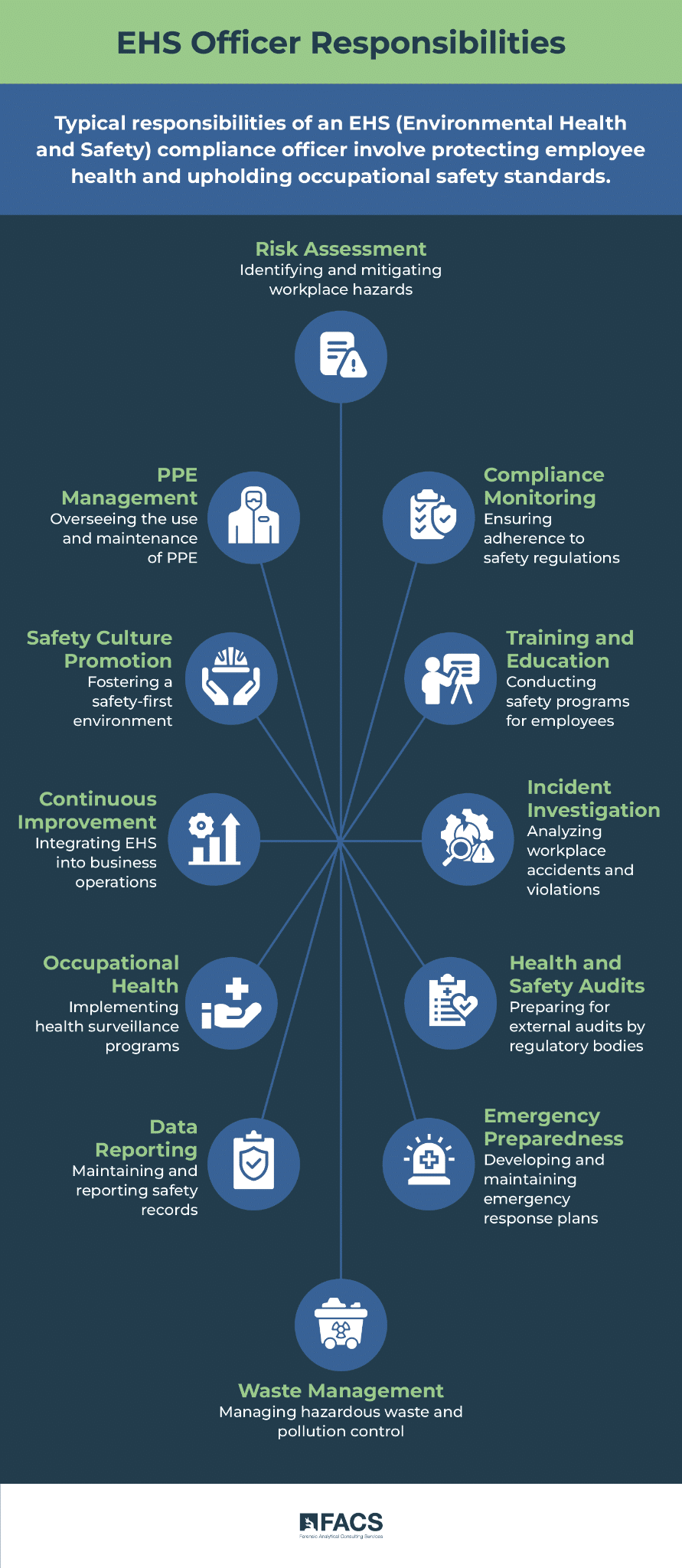

Typical EHS Compliance Officer Responsibilities
A high-performing EHS (Environmental Health and Safety) officer is responsible for ensuring a safe and healthy work environment while maintaining compliance with environmental and worker safety regulations.
Here are examples of the types of duties EHS management typically includes:
Risk Assessment and Management: Conducting regular risk assessments to identify potential hazards related to equipment, processes, and materials, and implementing control measures to mitigate risks.
Compliance Monitoring: Ensuring that the company complies with local, state, and federal regulations regarding environmental and occupational health and safety standards.
Training and Education: Developing and conducting regular safety training programs for employees, covering topics such as proper handling of hazardous materials, emergency procedures, and equipment safety protocols.
Incident Investigation: Leading investigations into workplace accidents, near misses, and safety violations, analyzing the root cause, and developing preventive measures.
Health and Safety Audits: Conducting regular internal audits to ensure safety procedures are followed, as well as preparing for external audits by regulatory bodies.
Emergency Preparedness and Response: Developing and maintaining emergency response plans, ensuring that employees are trained to respond appropriately to emergencies such as fires, chemical spills, or natural disasters.
Waste Management and Pollution Control: Managing the safe disposal of hazardous waste and implementing pollution control measures to minimize the company’s environmental footprint.
Data Reporting and Recordkeeping: Maintaining accurate records of safety inspections, accident reports, training sessions, and compliance audits, and reporting this data to relevant regulatory bodies.
Occupational Health Monitoring: Implementing and overseeing health surveillance programs, particularly if employees are exposed to hazardous substances or environments, ensuring they undergo regular medical evaluations.
Continuous Improvement: Working with cross-functional teams to integrate EHS considerations into business operations, identifying opportunities for improving safety, efficiency, and environmental sustainability.
Safety Culture Promotion: Leading initiatives to foster a safety-first culture within the organization, encouraging employee engagement and participation in safety-related activities.
PPE Management: Overseeing the procurement, proper use, and maintenance of Personal Protective Equipment (PPE) to ensure that all employees have the necessary tools to perform their jobs safely.
These and other responsibilities allow the EHS compliance officer to play a crucial role in both maintaining a safe working environment and ensuring environmental stewardship within the organization. The tasks rarely change — but the capability of the person assigned the position to fulfill those tasks properly can vary considerably.
A Better Way to Stay on Top of EHS Compliance
Applicants for safety officer positions may demonstrate excellent knowledge of OSHA requirements and be skilled at documentation, but they may not be skilled at tasks like PPE management, waste management, or emergency preparation. To place that person in the EHS compliance position may be a big mistake.
You need someone experienced at all phases of compliance. You need someone who can maintain safe working conditions for employees and never draw fines for failing to comply with regulations. This isn’t a position you can skimp on to save money or time. And that is why FACS developed the Expert Alliance Program. We provide trained and certified EHS experts to help you navigate the complexities of environmental health and safety.
Here’s how it works:
- You call FACS at (888) 711-9998 to arrange the first visit.
- Our EHS experts analyze your EHS plan and programs, show you what needs to happen to stay in compliance, and prepare a roadmap document to illustrate where the problems are and what needs to happen next.
- Next, we perform an on site hazard assessment. We make sure all equipment, materials, supplies, and situations that need to be addressed are addressed.
We will then show you the real cost of compliance under your present system versus the cost of compliance when you leverage our Expert Alliance Program. It won’t take you long to see that we’ve created an EHS solution that fits you perfectly.
The bottom line: The FACS team can manage or help supplement your EHS compliance efforts, will visit your site regularly to conduct compliance audits, and make sure you can focus on what you do best. Our job is to help you drive compliance in the right direction.
Call FACS at (888) 711-9998 or contact us online here.